Enterprise AI - April 13, 2026
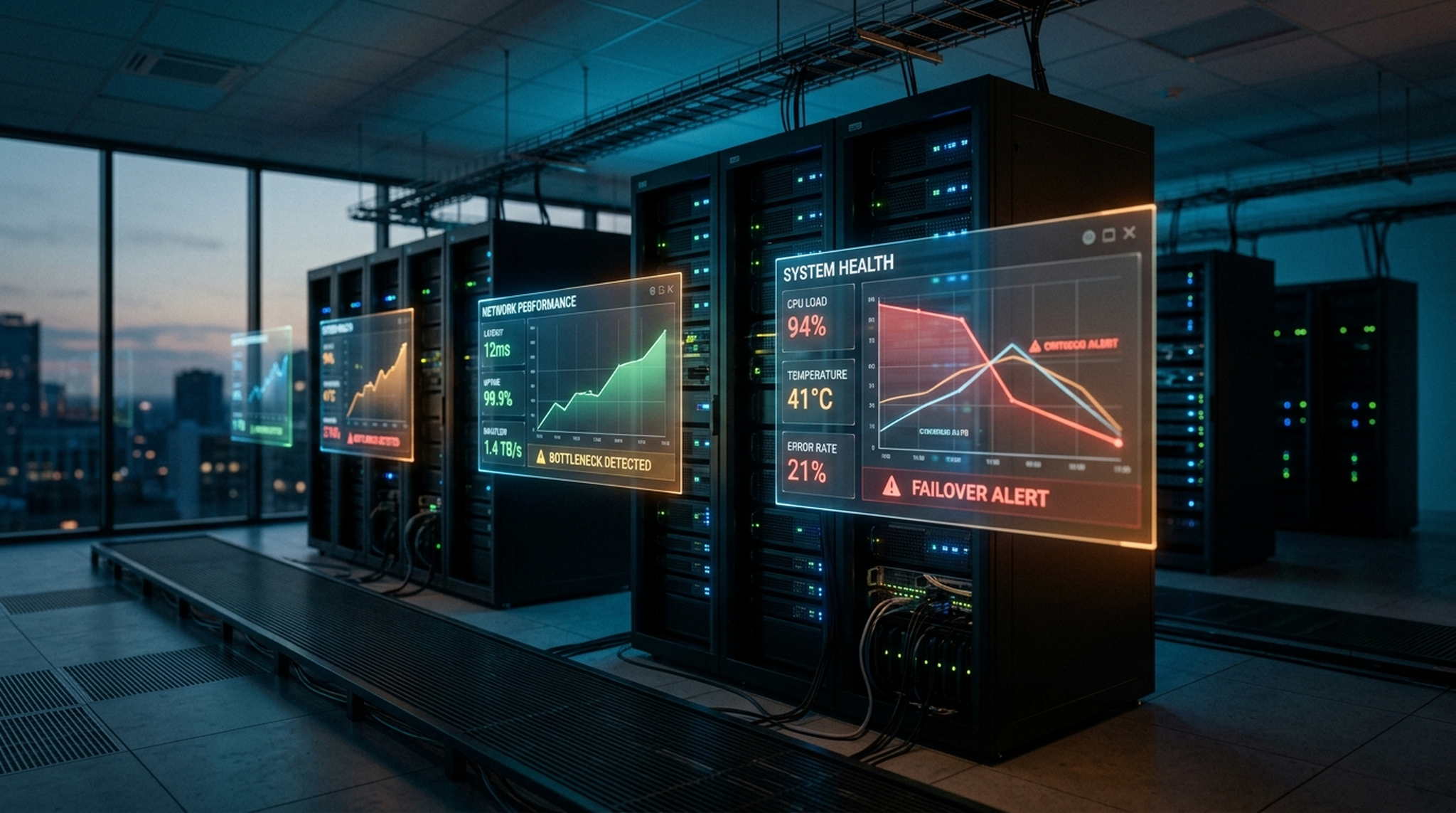
Your AI agents are making decisions based on different versions of reality - and most enterprise leaders have no idea it is happening until something breaks in production.
Across the Fortune 500, a quiet crisis is unfolding inside agentic AI systems. It does not look like a chatbot hallucination or a model regression. It looks like a procurement agent approving a vendor contract that the compliance agent already flagged as rejected. It looks like a forecasting agent acting on inventory numbers that the warehouse agent updated three minutes prior. It looks, in short, like chaos - organized enough to get through QA, catastrophic enough to cost millions.
This is Reality Fragmentation: the condition in which multiple AI agents operating inside the same enterprise are each consuming a different, partially-stale, context-incomplete snapshot of the world. It is not a model problem. It is not a prompt engineering problem. It is an architectural problem - and it is the single most underdiagnosed cause of enterprise AI failure in 2026.
74%
of enterprises report AI agents producing inconsistent outputs across teams
Gartner AI Deployment Survey, 2025
29%
of enterprise AI initiatives achieve their stated business objectives at scale
McKinsey Global Institute, State of AI 2025
58%
of agentic AI failures trace directly to stale or fragmented context data
Forrester Research, Agentic AI Risk Report, Q1 2026
$3.4M
average annual cost of AI-driven operational errors in large enterprises
IBM Institute for Business Value, 2025
How Reality Fragmentation Propagates
LIVE DATA LAYER
CRM, ERP, Warehouse, Compliance DB
STATE: T + 0 sec
-->
CONTEXT INGESTION
Each agent fetches its own context snapshot
LAG: 0 - 180 sec per agent
-->
FRAGMENTED STATE
Agent A sees T+0. Agent B sees T-60. Agent C sees T-180.
3 REALITIES, 1 ENTERPRISE
|
v
CONFLICT
Agents issue contradictory actions on the same record
RACE CONDITION
Downstream agents act before upstream changes commit
SILENT FAILURE
No error thrown - just the wrong business outcome
Diagram: PATech Labs Research, 2026. Illustrative model based on enterprise deployment patterns.
The Architecture Nobody Audited
When enterprises began deploying multi-agent AI systems in 2024 and 2025, the architecture discussions centered almost entirely on model capability, tool access, and API integration. The question of shared reality - of how agents would agree on the current state of the world before acting - was largely deferred. It was treated as an infrastructure concern, something the platform team would "figure out."
The result is a generation of agentic systems in which each agent operates in a kind of temporal isolation. A customer success agent might pull CRM data on a 30-second cache. A billing agent might refresh every 5 minutes. A fraud detection agent might operate on a real-time stream. When these agents coordinate - or worse, when their outputs trigger one another in cascade - they are not coordinating on the same facts. They are negotiating between parallel timelines.
"We had three agents touch the same customer account in 47 seconds," one VP of Engineering at a major US insurer told PATech Labs in background briefings. "Each one thought it was acting on the latest state. None of them were. The result was a duplicate policy issuance that took six weeks and a compliance review to unwind."
Why This Is Worse Than Hallucination
The AI industry spent three years building guardrails against hallucination - grounding models in retrieved facts, implementing RAG pipelines, red-teaming outputs. Reality Fragmentation is harder to catch because it does not look like a mistake. Every agent is grounded. Every agent has sources. The problem is that those sources are out of sync with each other.
Key Distinction
Hallucination produces outputs that are factually wrong and often detectable. Reality Fragmentation produces outputs that are locally valid but globally inconsistent - and standard observability tools are blind to the gap.
Standard LLM evals and output monitors check whether an agent's response is coherent with its inputs. They do not check whether those inputs are coherent with what other agents in the same system were given. That cross-agent consistency audit is a missing layer in virtually every enterprise AI observability stack deployed today.
The compounding risk: as enterprises push toward fully autonomous agent pipelines - approvals, procurement, customer communications, financial adjustments - the blast radius of a fragmented-reality decision grows from a bad recommendation to an irreversible real-world action.
The Three Layers Where Fragmentation Enters
CTOs who have diagnosed this problem in their own systems consistently identify three architectural layers where reality fragmentation enters the pipeline:
01
Context Retrieval Asynchrony
Each agent fetches its own context at its own cadence. Without a shared context bus or a mandatory state-stamp protocol, agents in the same pipeline operate on different temporal cuts of the same data sources. Cache TTLs are set per-tool, not per-workflow.
02
Memory Store Divergence
Long-term and episodic memory stores - where agents persist learned state between runs - are rarely synchronized across agent boundaries. Agent A updates a customer risk profile. Agent B, running in a parallel thread, never sees that update before issuing its recommendation.
03
Tool Output Non-Determinism
When two agents call the same tool at T+0 and T+45 respectively, the tool may return different results - not because of an error, but because the underlying data changed. Without a workflow-level snapshot contract, this is expected behavior that the agentic orchestrator treats as equivalent information.
Action Steps: What CTOs Should Do This Quarter
1
Audit your agent context timestamps
For every agent in your production pipelines, log the retrieval timestamp of each external data source used in a given workflow run. Calculate the maximum time-spread across agents in the same pipeline. Anything above 60 seconds on mutable data is a fragmentation risk.
2
Implement a workflow-scoped context snapshot
At workflow initialization, capture a single coherent snapshot of all relevant state. Pass this snapshot as the canonical context for every agent in that workflow invocation. This eliminates intra-workflow temporal drift without requiring real-time data infrastructure changes.
3
Build cross-agent consistency checks into your eval framework
Standard LLM evals test output quality. Add a consistency eval layer: do the outputs of Agent A and Agent B, when operating on the same workflow, make logically compatible assumptions about shared state? Flag contradictions as fragmentation events, not just errors.
4
Classify actions by reversibility before granting autonomy
Interested in implementing similar AI solutions? Discover how PATech Labs can help your business leverage cutting-edge artificial intelligence.
Learn About Our ServicesMap every action your agents can take against a reversibility matrix. Low-reversibility actions - financial transactions, external communications, compliance filings - should require a reality-check gate: a synchronized re-fetch of relevant state within 5 seconds of action execution.
5
Assign an agent reality coordinator role in your architecture
In agentic systems of 5+ agents, designate one component as the Reality Coordinator - a lightweight orchestration layer responsible solely for maintaining and distributing a shared world-state object. This is not a new model: it is a design pattern borrowed from distributed systems that the AI industry has been slow to adopt.
Sources
- Gartner. "AI Deployment Survey: Enterprise Scale Outcomes." Gartner Research, 2025.
- McKinsey Global Institute. "The State of AI in 2025: Enterprise Adoption and Return on Investment." McKinsey & Company, 2025.
- Forrester Research. "Agentic AI Risk Report: Context Integrity and Multi-Agent Failure Modes." Forrester, Q1 2026.
- IBM Institute for Business Value. "The Cost of AI Operational Errors in Large Enterprises." IBM IBV, 2025.
- PATech Labs Research. "Reality Fragmentation: Architecture Patterns in Enterprise Agentic Deployments." Internal Analysis, April 2026.
Disclaimer: This article is for informational purposes only. PATech Labs does not provide legal services.
PATech Labs Intelligence Store - Coming April 2026
Get a 200-page intelligence brief on building resilient multi-agent AI architectures - before your competitors do.
28 specialized AI agents. 200-page intelligence reports.
Follow @patechlabs for early access.
Корпоративный ИИ - 13 апреля 2026
Почему корпоративные ИИ-агенты продолжают давать сбои: проблема фрагментации реальности, которую технические директора обязаны решить прямо сейчас
Ваши ИИ-агенты принимают решения на основе разных версий реальности - и большинство руководителей предприятий не подозревают об этом вплоть до момента, когда что-то ломается в продакшене.
По всем компаниям из списка Fortune 500 внутри агентных ИИ-систем разворачивается скрытый кризис. Он не похож на галлюцинацию чат-бота или регрессию модели. Он выглядит так: агент по закупкам одобряет контракт с поставщиком, который агент по комплаенсу уже пометил как отклонённый. Или так: агент прогнозирования действует на основе данных об остатках на складе, которые агент управления складом обновил три минуты назад. Если коротко - это хаос, достаточно организованный, чтобы пройти QA, и достаточно разрушительный, чтобы стоить миллионов.
Это и есть фрагментация реальности: состояние, при котором несколько ИИ-агентов, работающих внутри одного предприятия, каждый потребляет свой собственный - частично устаревший, неполный по контексту - срез картины мира. Это не проблема модели. Это не проблема проектирования промптов. Это архитектурная проблема - и в 2026 году она является самой недооценённой причиной провала корпоративного ИИ.
74%
предприятий сообщают о несогласованных результатах работы ИИ-агентов в разных командах
Gartner AI Deployment Survey, 2025
29%
корпоративных ИИ-инициатив достигают заявленных бизнес-целей в масштабе
McKinsey Global Institute, State of AI 2025
58%
сбоев агентного ИИ напрямую связаны с устаревшими или фрагментированными контекстными данными
Forrester Research, Agentic AI Risk Report, Q1 2026
$3.4M
средние ежегодные потери от операционных ошибок, вызванных ИИ, в крупных предприятиях
IBM Institute for Business Value, 2025
Как распространяется фрагментация реальности
СЛОЙ ЖИВЫХ ДАННЫХ
CRM, ERP, склад, база данных комплаенса
СОСТОЯНИЕ: T + 0 сек
-->
ЗАГРУЗКА КОНТЕКСТА
Каждый агент получает собственный срез контекста
ЗАДЕРЖКА: 0 - 180 сек на агента
-->
ФРАГМЕНТИРОВАННОЕ СОСТОЯНИЕ
Агенты действуют на основе противоречивых версий реальности
РИСК: конфликты решений
IA Empresarial - 13 de abril de 2026
Por Que los Agentes de IA Empresarial Siguen Fallando: El Problema de Fragmentacion de Realidad que los CTOs Deben Resolver Ahora
Sus agentes de IA toman decisiones basadas en versiones distintas de la realidad - y la mayoria de los lideres empresariales no tienen idea de que esto esta ocurriendo hasta que algo falla en produccion.
En las empresas del Fortune 500, una crisis silenciosa se esta desarrollando dentro de los sistemas de IA agentiva. No se parece a una alucinacion de un chatbot ni a una regresion de modelo. Se parece a un agente de compras aprobando un contrato con un proveedor que el agente de cumplimiento ya habia marcado como rechazado. Se parece a un agente de pronosticos actuando sobre cifras de inventario que el agente de almacen actualizo tres minutos antes. Se parece, en pocas palabras, al caos - lo suficientemente organizado como para pasar el control de calidad, lo suficientemente catastrofico como para costar millones.
Esto es la Fragmentacion de Realidad: la condicion en la que multiples agentes de IA que operan dentro de la misma empresa consumen, cada uno, una instantanea del mundo diferente, parcialmente desactualizada e incompleta en contexto. No es un problema del modelo. No es un problema de ingenieria de prompts. Es un problema arquitectonico - y es la causa mas subestimada de fracaso de IA empresarial en 2026.
74%
de las empresas reportan que sus agentes de IA producen resultados inconsistentes entre equipos
Gartner AI Deployment Survey, 2025
29%
de las iniciativas de IA empresarial logran sus objetivos de negocio declarados a escala
McKinsey Global Institute, State of AI 2025
58%
de los fallos de IA agentiva se deben directamente a datos de contexto desactualizados o fragmentados
Forrester Research, Agentic AI Risk Report, Q1 2026
$3.4M
costo anual promedio de errores operativos impulsados por IA en grandes empresas
IBM Institute for Business Value, 2025
Como se Propaga la Fragmentacion de Realidad
CAPA DE DATOS EN VIVO
CRM, ERP, Almacen, Base de Cumplimiento
ESTADO: T + 0 seg
-->
INGESTION DE CONTEXTO
Cada agente obtiene su propia instantanea de contexto
RETRASO: 0 - 180 seg por agente
-->
REALIDAD FRAGMENTADA
Cada agente opera con una version distinta de los hechos
RESULTADO: Decisiones en conflicto